
On truth and knowing and GLP

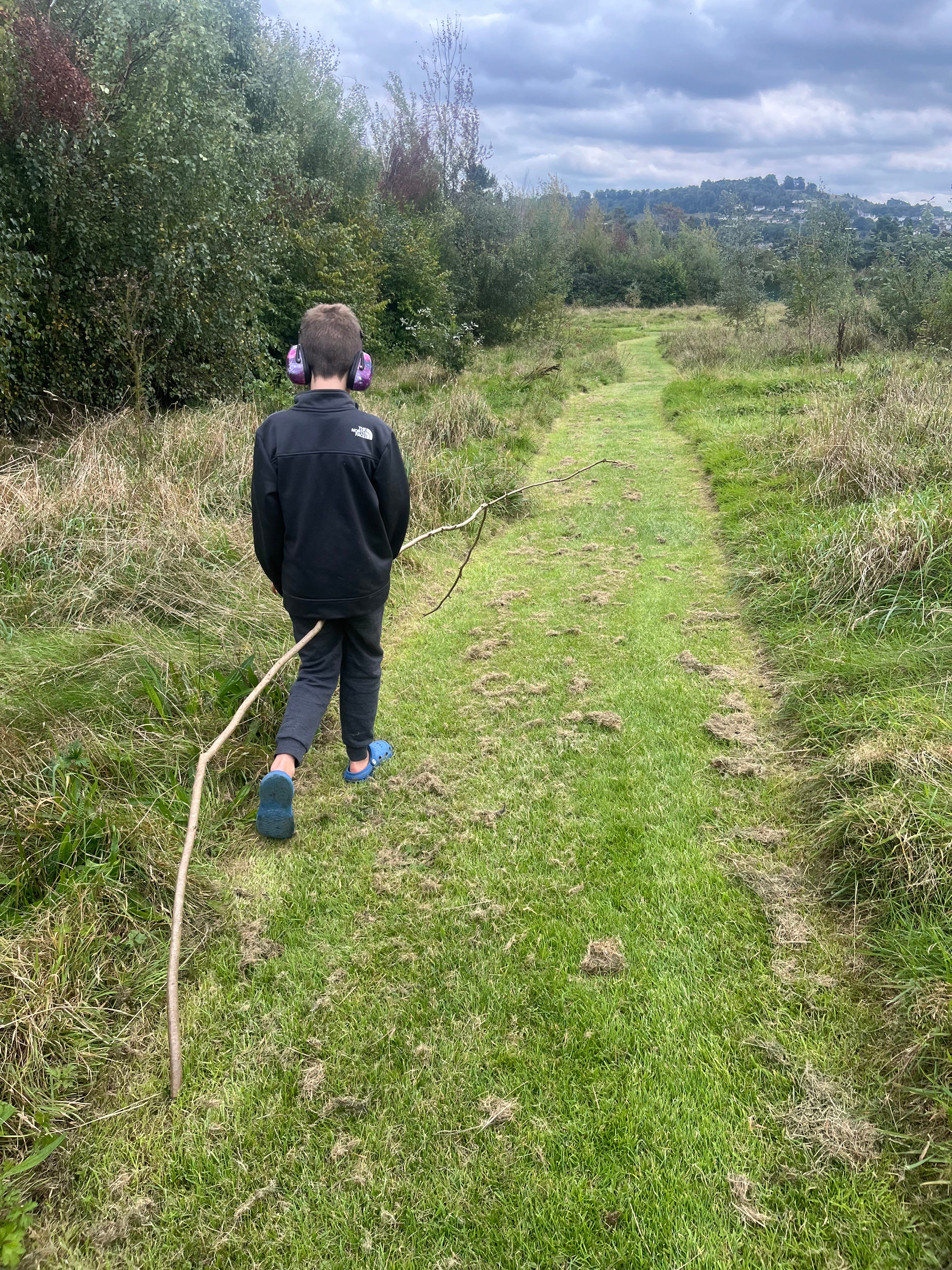
One of the most helpful things I know about my son J is that he is a gestalt language processor (GLP). As such he has always expressed himself differently. When he was younger, he gained language first in long chunks, exactly as he’d heard them (sometimes called echolalia). Over time he broke these phrases down into smaller, combinable chunks, then into single words. At every stage he used his language meaningfully, but he was nearly eight years old when he began to build his own sentences, using grammar for the first time. This remains difficult for him. His words have lost the flow that the echoes used to lend them. In between long periods of non-speaking, he continues to grapple with this.
It is easy to see how non-speakers or those who communicate differently are at risk of exclusion from the activity of shared understanding and meaning making which is so important for human connection. When we communicate, we are sharing what we know, what we feel, how we perceive things, what we desire. We do harm if we assume that unless a person has fluent language, they cannot know anything worth sharing, or that what they do share lacks meaning. As the philosopher Miranda Fricker says in her book Epistemic Injustice, to discount a person’s expression of what they know is “to wrong them in their capacity as a giver of knowledge, and thus in a capacity essential to human value.”
Epistemology: Theories of knowledge and how we know what we know.
What we are permitted to claim as knowledge can depend on which academic discipline or professional context we are speaking within. Or as Wittgenstein saw it, our words are differently valid or useful depending on the conventions of the “language game” we are trying to play.
My understanding of J has been greatly improved by Marge Blanc’s (2012) qualitative research on GLP. This research is seen as groundbreaking by many who recognise its findings in the children they parent or support. However, it also challenges the prevailing understanding within some disciplines. It is perhaps unsurprising, therefore, that we are now seeing backlash from those who feel its conclusions do not fit with the ways they are accustomed to speaking about things. We see this in mainstream linguistics which refers to echolalia only as pathology and a failure of “typical” language development. In mainstream psychology which sees autistic communication as primarily reflecting a deficit in social understanding at a cognitive level. And, in behaviourism which insists that autistic language is “verbal behaviour” which can be shaped and improved through operant conditioning, much like training an animal.
My immediate and emotional reaction when confronted with such naysayers is indignation, because GLP is a developmental process I have personally witnessed in my child and increasingly hear about in others. There are some interesting individual differences in the way this can look, but the phenomenon remains recognisable. I know this. As surely as I know my own breath, my own child, as surely as I can know anything.
This is the point where it stops making sense to speak about what we can know only in terms of abstract language games or the established rules of different academic disciplines. Because the shock of being disbelieved about our own experiences is visceral and piercing. It is as if someone has scooped up all the everyday pity and condescension and sharpened it. I am revealing my privilege here in the fact that I am relatively unused to this feeling. There is still horror for me in this realisation, that my own knowledge, and that of many autistic people and GLPs and their families. It doesn’t actually count.
Epistemic injustice: When some people’s knowing and ways of knowing count more than others. Linked to testimonial injustice – when some people are less likely to be believed because of who they are.
GLPs are often autistic, and recent critique of GLP has focused heavily on its incompatibility with traditional understandings of autism. As such it is perhaps best seen as one manifestation of a wider crisis around our collective understanding of what it means to be autistic.
We now have a well-established body of research around autism, going back decades. This is mostly research which autistic people had no role in creating or evaluating, the conclusions of which rest solely on the interpretations of neurotypical researchers. For example, the view that autistic children lack empathy or motivation to connect with others because they do not understand that other people have minds - perceiving others merely as “bags of skin draped over chairs and stuffed into pieces of cloth” as developmental psychologist Alison Gopnik once described it. Or the view that because autistic people may misunderstand some socially constructed contexts, the details they attend to must be random - lacking any sense of context at all.
These are interpretations which most autistic people see as deeply offensive and inaccurate. Yet all remain pervasive interpretations within the services and supports that families like mine are offered.
Hermeneutics – Theories of interpretation or the art of understanding and sense making. The fundamental activity of all human minds as we seek to live meaningful lives. As the writer Richard Flanagan puts it, “Experience is but a moment. Making sense of that moment is a life.”
Hermeneutic injustice: When certain groups of people lack the language or frameworks to interpret and make sense of their own experiences due to the historic exclusion of such groups from the creation of that language and those frameworks.
In the case of GLP, there are many parents who know their child is developing language differently, but it is hard for them to interpret that knowledge because they lack a framework with which to do that. The language they may have been given such as “echolalia” often doesn’t feel right. I hadn’t heard of GLP when J was younger. I remember saying to a speech therapist when he was a preschooler, “It can’t be echolalia because he uses it so meaningfully. I don’t know what it is!”
Another example of hermeneutic injustice would be the many undiagnosed autistic people who find themselves thinking some version of, “but I can’t be autistic because I don’t like trains, I have plenty of empathy, and yet… I still feel different in important ways that I’ve been given no language for.”
I see this in J too. I have tried to tell him he is autistic, but he receives mixed messages from the world about what that means. I was recently talking to him about dreams. I’ve often wondered what he dreams about because he’s never had the language to tell me. I say to him, “Sometimes I have dreams that are like big adventures, and when I wake up, I feel so surprised to be back in my bed. Does that happen to you?” He gives me a high five to signal “yes” and I say, “see, your brain is amazing!” He seems unsure about this, takes my hand and places it on his head. “Crazy” he says.
Autistic people are often exposed to well-meaning advice but have limited access to collective frameworks which actually resonate with their experiences and help to make sense of them. The impact of this on an already marginalised population is not trivial. Having your instincts about yourself repeatedly overwritten by the judgments and misinterpretations of others is likely to impact upon your sense of who you are, leading to self-doubt and difficulty trusting your own perceptions, as many autistic people attest to.
The paradigm shift we need here is already beginning to happen, thanks largely to the neurodiversity movement. There are now theories emerging from within that, such as monotropism and the double empathy problem, which fit better with reported lived experiences of being autistic.
This movement is often underestimated by those paying insufficient attention to it. It is still seen by many as just a sweet attempt to say nicer things about autistic people - “Oh poor thing, but he is very good at jigsaw puzzles!” Or as a denial of the challenges that autistic people face - “Your autism is a superpower!” But neurodiversity affirming practice is never achieved through a pretence at positivity within existing frameworks. The neurodiversity movement is attempting something more ambitious than that, which is to communicate that the way autistic people understand themselves is fundamentally different from many of the narratives reported in journals and confidently spouted by professionals. And it is the frameworks themselves which need to change.
Social injustice: The unequal treatment of a group of people within society, which results in one group being at a disadvantage. Frequently linked to systemic injustice as we see it manifested within all our institutions.
Caring for a disabled child involves navigating endless systems. Everything we ever need to do has its own convoluted procedure, which most people don’t even know about because systems tend to be more streamlined for those they were actually designed for, which is never us. We fill in endless paperwork in the holy name of evidence. We watch our children and instead of enjoying the moment, we find ourselves mentally rehearsing how we might describe this moment to professionals, worrying what they might think, how they might judge us.
We listen to explanations of protocols so we can understand the hoops we must therefore jump through. We make many ‘to do’ lists and feel guilt over their non-completion. All of this has significant cost for families in time, in peace of mind, often in money too. But we parents have to follow official recommendations, don’t we? Otherwise we’ll be susceptible to any old snake oil we find on the internet, because how will we know what is true?
I am all for the truth, but if the truth sets us free, I struggle to feel much freedom in any of this. There is a widespread assumption that we must control and standardise everything so as to reproduce the same truth in each instance. This may work in the natural sciences, but it feels impossible when supporting children because every child is themselves a unique being and a new context.
As the philosopher John Caputo puts it, “Interpretation is always about context. Looking for a rule to follow is always the height of irresponsibility. I was just following orders is a lamentable excuse.” Caputo addresses accusations of relativism (the idea that if we deny absolute truth then anything goes) by arguing that truth remains important, but the kind of truth we experience is dynamic and must be recreated and rediscovered within each context. He gives the example of West Side Story being a retelling of Romeo and Juliet. In an important sense, the two stories contain the same themes and tell the same truth – and yet the truth of the original play has also been entirely remade through its production in a new form.
I would argue, so it is with any child-led practice. Truth reveals itself naturally and collaboratively in a way that is unique to that child. When we compare our experiences with others, we often find the same underlying truths reoccurring. Much of that truth we can learn from, and some of it can be captured by research. However, what we learn from others will only help us if we first recontextualise it and make it our own, for this child, for this situation.
Qualitative research can be useful to us here, aiming as it does to closely study lived experience and find those common themes across many examples, without losing sight of the individual differences. However, there can be no justice until a marker of validity for any kind of research becomes – Who is this research about and what do they think about it? Do its conclusions help or hinder their ability to interpret and express what they already know of themselves?
I still believe research has a role in understanding and supporting children like J. The advancement of our collective knowledge requires the pursuit of truth, as has always been the goal of research. However, the advancement of our collective goodness, our collective wisdom- that endeavour requires both truth and justice – neither of which can be meaningfully attained in the absence of the other.